Meta Description
Discover everything about adhesive labels: structure, materials, and finishing techniques. Learn how to create high-quality custom stickers for product packaging and branding.
Keywords
Adhesive labels, custom stickers, label materials, label finishing, product packaging, self-adhesive labels, PVC label, PET label, PP label, hot stamping, lamination
Ultimate Guide to Adhesive Labels | Materials, Structure & Finishing
Adhesive Labels 101: Everything You Need to Know
Adhesive labels—also known as self-adhesive or pressure-sensitive labels—are everywhere in our daily life. They are flexible, durable, and play a key role in product packaging, branding, and information display.
In this guide, we’ll walk you through:
- Adhesive Label Structure
- Common Label Materials
- Popular Finishing Techniques
By the end, you’ll understand how to design custom labels that perfectly match your product and brand.
1. Structure of Adhesive Labels
An adhesive label is made of multiple layers, each with a specific purpose to ensure print quality, durability, and easy application.
- Top Coating – Enhances surface tension, improves ink adhesion, and protects against scratches or fading.
- Face Stock – The visible layer where your design is printed, typically made of paper or film.
- Primer Layer – Protects the face stock and prevents adhesive from seeping through.
- Adhesive – Connects the label to the product surface. Types include:
- Permanent Adhesive – Strong bonding, hard to remove.
- Removable Adhesive – Easy to peel without leaving residue.
- Release Coating (Silicone Layer) – Ensures easy separation from the liner.
- Liner (Backing Paper) – Supports the label during printing and application.
- Back Coating / Back Printing – Prevents adhesive transfer and allows for hidden branding or security printing.
2. Common Adhesive Label Materials
Adhesive labels are mainly divided into paper-based and film-based materials.
2.1 Paper-Based Labels
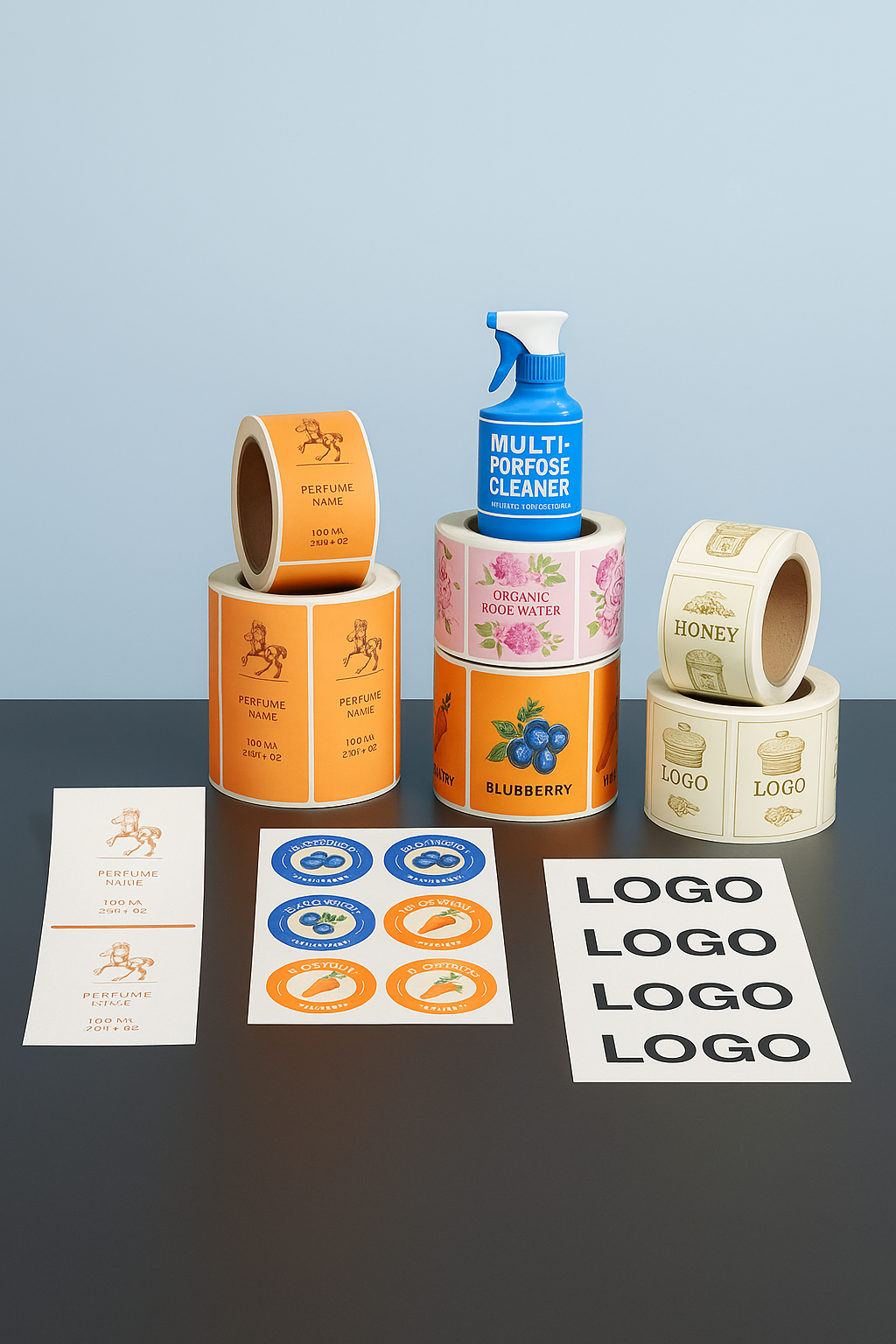
Paper-based labels are easy to print, breathable, and cost-effective for short-term use. They can also be laminated for water and oil resistance.
Popular paper materials include: Coated paper, Art paper, Kraft paper, Laser paper, Silver/Gold paper, Textured paper.
2.2 Film-Based Labels
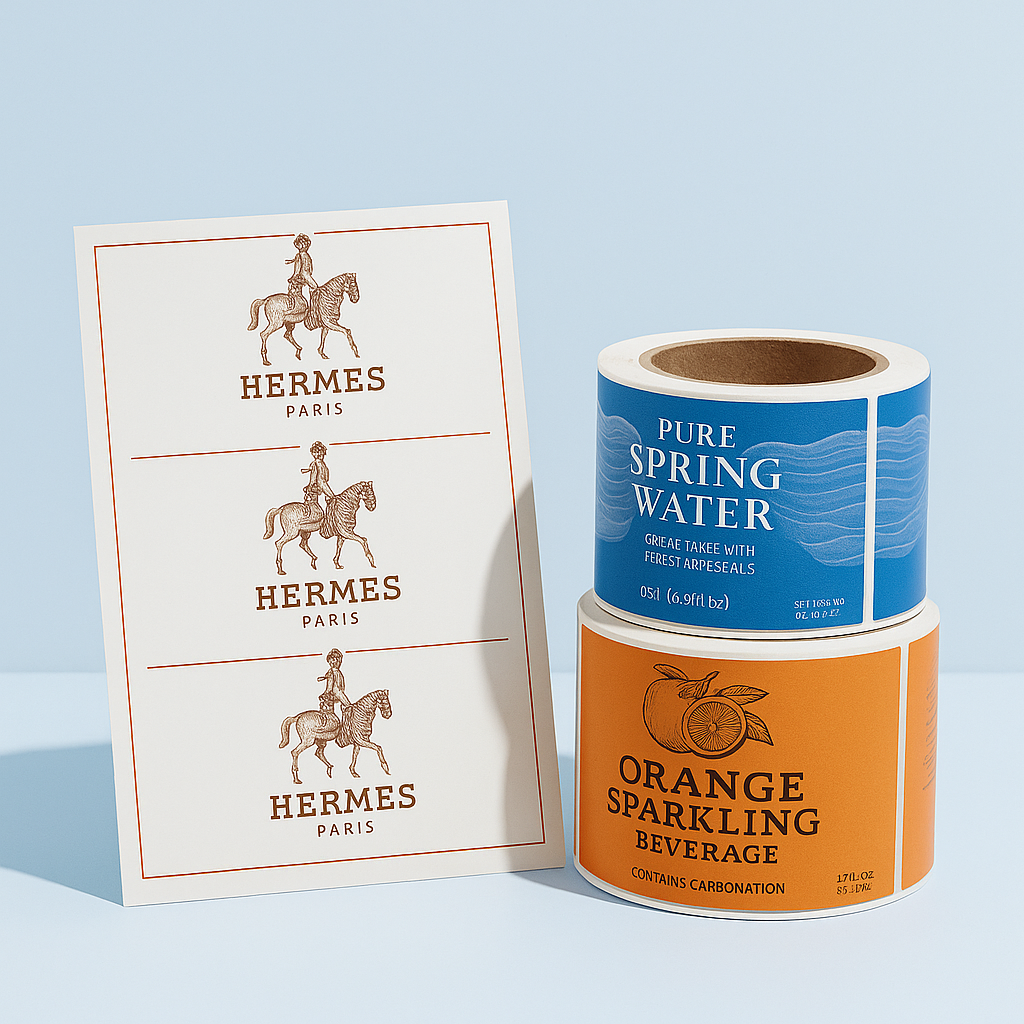
Film-based labels are durable, waterproof, and oil-resistant. They are ideal for premium products and outdoor applications.
Common film materials: PVC, PET, PP, PC, Synthetic Paper.
3. Popular Label Finishing Techniques
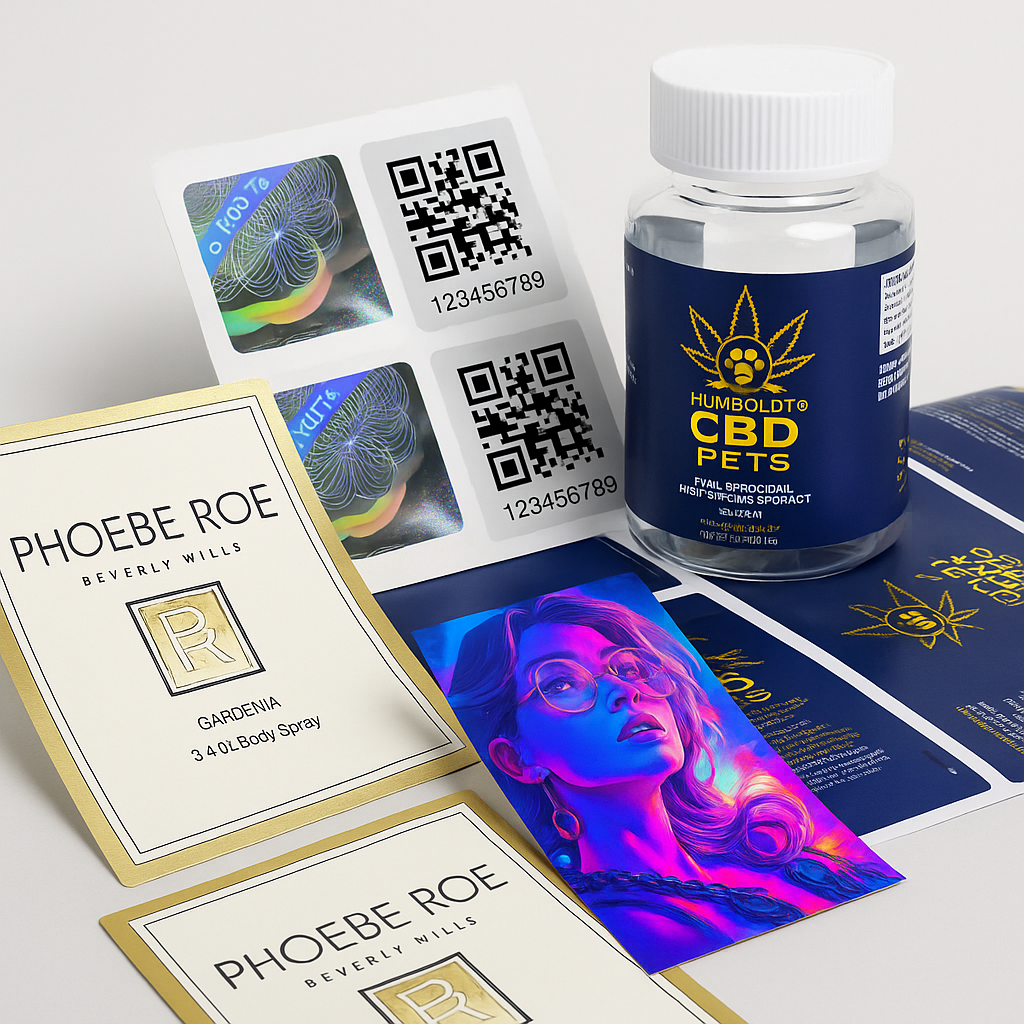
Finishing techniques enhance both the visual appeal and durability of labels. Below are the most popular options:
3.1 Hot Stamping

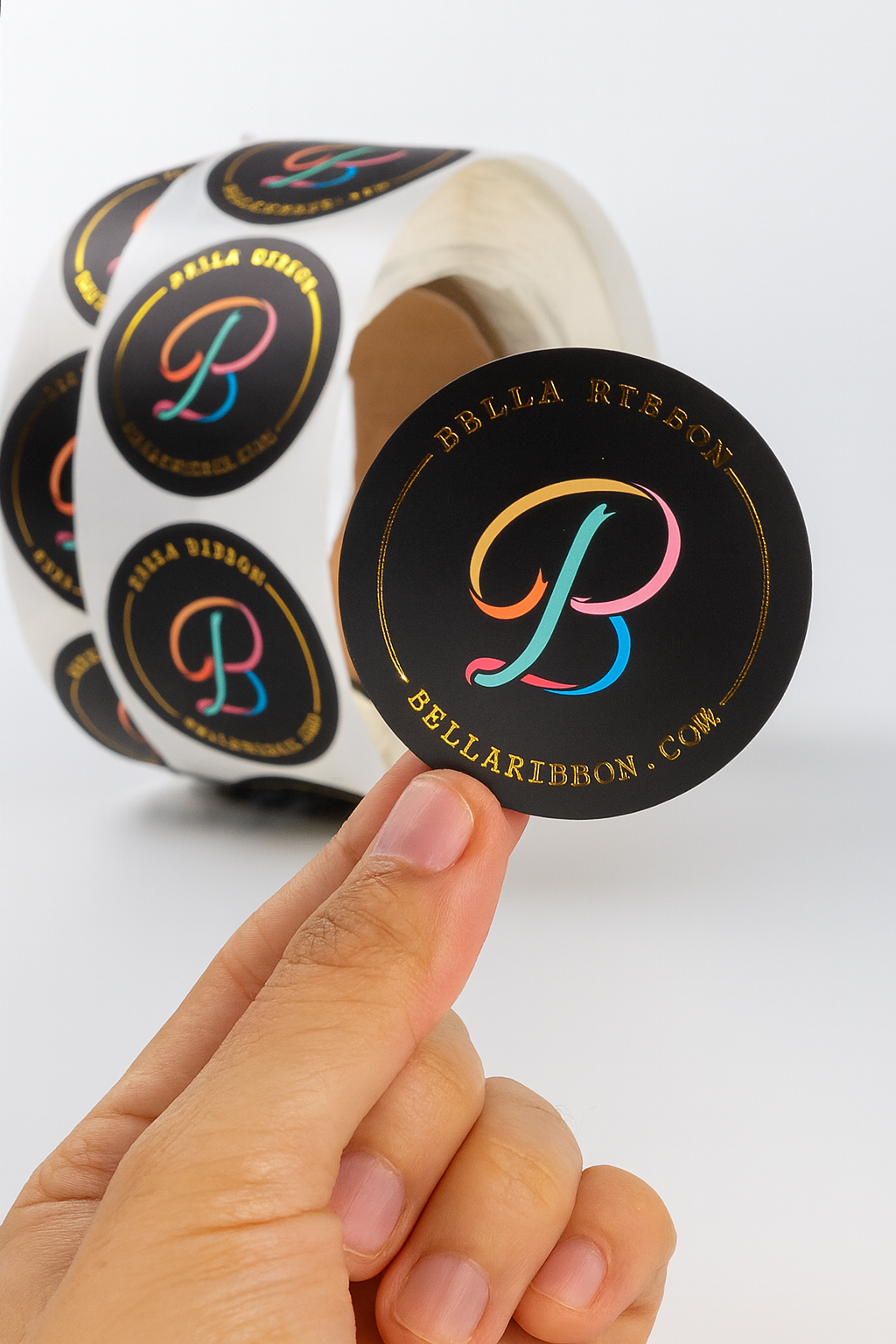
Creates metallic effects such as gold or silver foil, perfect for luxury packaging.
3.2 Cold Foiling

Produces high-gloss or matte contrast effects with excellent durability and adhesion.
3.3 UV Spot Varnish

Creates raised, glossy areas that add texture and visual impact.
3.4 Reverse UV
Combines glossy and matte finishes for elegant contrast on the same label.
3.5 Lamination

Gloss Lamination – Bright and reflective.
Matte Lamination – Non-reflective and sophisticated.
3.6 Coating (Varnish)
Gloss Coating – Enhances brightness and color.
Matte Coating – Adds a soft, premium finish.
Conclusion
Adhesive labels are essential for product branding and packaging. By understanding their structure, materials, and finishing techniques, you can create high-quality, customized labels that elevate your brand.
Looking for professional adhesive label manufacturing? Contact Your Company Name, a trusted supplier for global packaging solutions.
Custom Printed Packaging Boxes: Common Problems & Solutions
Lorem Ipsum is simply dummy text of the printing and typesetting industry. Lorem Ipsum is simply dummy text of the printing and typesetting industry.
Custom Printed Shopping Bags
Lorem Ipsum is simply dummy text of the printing and typesetting industry. Lorem Ipsum is simply dummy text of the printing and typesetting industry.
Custom Printed Shopping Bags
Lorem Ipsum is simply dummy text of the printing and typesetting industry. Lorem Ipsum is simply dummy text of the printing and typesetting industry.
Custom Printed Packaging Boxes: Common Problems & Solutions
Lorem Ipsum is simply dummy text of the printing and typesetting industry. Lorem Ipsum is simply dummy text of the printing and typesetting industry.

